The World-Builders: Why Game Coding Creates the People Who Change Everything
First published on LinkedIn.
When I was eleven, I won a Spectrum 48 computer in a magazine competition. It was 1981, and home computers were still a novelty; I was one of roughly one in a hundred children in the UK with access to one.
Through my teens I spent evenings after school writing video games. To me a computer was not a logical device for maths and coding, it was a doorway into creating worlds: crawling through monster-infested dungeons, crossing vast galaxies in tiny spaceships, and trading with aliens who might as quickly kill you as trade. I believe that passion made all the difference … and I’m not the only one.
That’s the part many adults miss.
When we say “teach kids to code,” we often picture something neat, academic, and slightly sterile: a course, a worksheet, a set of commands to memorise. But children don’t fall in love with syntax. They fall in love with possibility.
Games give them that possibility in its purest form: a world that responds to their ideas.
And when a child experiences that — really experiences it — something bigger than “learning to code” happens. A mindset begins to form:
- I can make things that didn’t exist before.
- I can understand how systems work.
- When something breaks, I can fix it.
- If I keep iterating, I get better.
- I can share what I build, and it can matter to other people.
That’s the builder mindset. The world-builder mindset. And it’s one of the most reliable foundations for people who later have outsized impact — whether they become engineers, founders, scientists, designers, or leaders.
If that sounds lofty, it’s worth noticing how many famous builders began exactly this way: by making games as kids.
Below are the key reasons game coding works so well — paired with six people who embody what it can grow.
1. Games make the learning loop irresistible
Most learning fails because the feedback loop is weak.
Games flip that. You change the code and something moves. You tweak a variable and the whole experience changes. The result is immediate, visible, and meaningful.
That’s not a minor detail. It’s the engine of mastery.
John Carmack — one of the most influential programmers in the history of 3D graphics — was already writing games early on:
“Some of the very early games I wrote for the Apple II were basically Ultima ripoffs.”
That line is almost throwaway, but it reveals something important: he wasn’t “learning programming” in the abstract. He was building worlds, stealing patterns from the games he loved, and iterating until it worked.
That’s how kids learn best: not through perfect lesson plans, but through a compelling loop they want to repeat.
Game coding doesn’t just teach concepts. It manufactures practice.
2. Games force precision (because the computer won’t “sort of” understand)
A child can explain a game to a friend with vague language and still play.
A computer can’t.
To make a game work, kids must translate messy human rules into precise logic:
- exactly when you score
- exactly how collisions work
- exactly what “jump” means
- exactly what happens when two things occur at once
Bill Gates describes this perfectly when recalling writing a simple game early on:
“Getting it to work forced me to think through… the most basic elements of the game’s rules.”
That sentence is basically the origin story of programming skill.
Because the deepest shift isn’t “I know how to type code.” It’s “I can define reality clearly enough that a machine can run it.”
That clarity scales. It becomes the foundation for building reliable software, designing robust systems, and making good decisions under complexity.
3. Games reframe debugging as resilience (not failure)
In a lot of education, mistakes feel like judgement.
In game development, mistakes feel like information.
A character falls through the floor? Great — now we’ve got something real to investigate. A score resets unexpectedly? That’s a clue. A level becomes unfair? That’s a design bug, not a moral failure.
This matters because the “secret” of successful builders is not that they avoid problems. It’s that they stay calm inside problems.
Games train that calmness naturally, because the goal is emotionally compelling: make it fun, make it work, make it better.
Kids who build games learn the habit of iteration:
Try → observe → adjust → repeat
And that habit shows up everywhere later: in engineering, product design, research, entrepreneurship — anywhere that progress is made through imperfect experiments and steady refinement.
4. Games create extreme practice without external pressure
This is where games quietly beat almost every other learning pathway: children will practise far longer than you can realistically “assign.”
Tim Sweeney, founder of Epic Games and the creator of Unreal Engine, describes the scale of his early practice like this:
“I’d probably spend about 10 or 15,000 hours writing code… as a kid…”
That’s not a curriculum. That’s obsession-level repetition.
And it’s not unique. It’s a pattern: games make the effort feel worthwhile, so practice compounds. The child doesn’t need to be forced. They pull themselves forward.
This is why games are such a powerful on-ramp: they make hard work voluntary.
5. Games teach “shipping” (finishing, sharing, learning from reality)
Big impact doesn’t come from ideas alone. It comes from shipping.
Games make shipping concrete, because the output is immediately testable by other humans. A game either runs or it doesn’t. It’s either fun or it isn’t. People either come back or they don’t.
That reality teaches product thinking early:
- How do I onboard a player?
- What feels confusing?
- What feels rewarding?
- What’s too easy? too hard?
- What makes someone want “one more go”?
Elon Musk’s childhood game “Blastar” is famous partly because it shows this instinct early:
“A trivial game…but better than Flappy Bird.”
Joke aside, the point is: he built something complete enough to be a thing in the world. That “I can ship” muscle is one of the strongest predictors of later impact — because it turns learning into output, not just knowledge.
6. Games flip kids from consumers of technology into owners of it
Most children experience technology as something you download, scroll, and consume.
Game coding reverses the relationship.
Instead of living in other people’s worlds, you learn to create worlds of your own. You stop seeing software as magic and start seeing it as made. That shift changes identity: from user to maker.
Markus “Notch” Persson (creator of Minecraft) described how he learned as a kid:
“We subscribed to a computer magazine that had code listings in it, and that’s how I learned.”
Or in a longer interview, he explains the deeper mechanism: typing listings, then changing things and watching what happens.
That’s the maker pathway in its simplest form:
copy → tweak → break → fix → create
And once a child internalises “I can change the rules,” they don’t just learn coding. They learn agency.
7. Games are “systems you can touch” — and systems thinking scales to society
Here’s the underappreciated part: game development isn’t only coding. It’s systems thinking.
Every game is a system of interacting rules and feedback loops:
- incentives (points, upgrades, unlocks)
- constraints (time, resources, difficulty)
- balance (risk vs reward)
- emergent behaviour (players do the unexpected)
If a child learns to design and debug those systems, they’re learning a mental model that later applies to far bigger systems: education, economics, networks, infrastructure, science.
Demis Hassabis — who went from game design and competitive strategy to leading AI breakthroughs — puts the origin plainly:
“My interest in science and AI started with games.”
That is the world-builder arc: games spark curiosity about intelligence, strategy, optimisation, learning — then that curiosity scales into tools that reshape what’s possible in medicine and research.
Games are not a detour from “serious” thinking. For many people, they’re the doorway into it.
So what kind of person emerges from game coding?
When you add all these effects together, game coding tends to produce a particular kind of builder — someone who:
- has agency (“I can make things”)
- thinks precisely (rules, edge cases, logic)
- is resilient (debugging as normal)
- learns by iteration (fast feedback loops)
- ships (finishes and shares)
- thinks in systems (interactions, incentives, feedback)
Those are not just “coding skills.” They’re the foundations of modern impact.
And they matter more than ever, because society increasingly runs on software — on the systems software creates, and the incentives it amplifies.
The world doesn’t just need more people who can type code.
It needs more people who can build thoughtfully, debug responsibly, iterate intelligently, and create systems that help humans thrive.
World-builders.
What this means for parents and educators
If you want children to become confident coders, don’t start by asking them to “learn programming.”
Start by helping them build a tiny world.
A great first ladder looks like:
- move a character
- collect something
- add a score
- add a win/lose condition
- add one enemy or obstacle
- tune the difficulty
- share it with someone
The magic isn’t the language. It’s the loop:
create → test → debug → share → improve
That loop is how builders are made.
And history suggests: if you give enough children a doorway into making worlds, a few of them will go on to change ours.
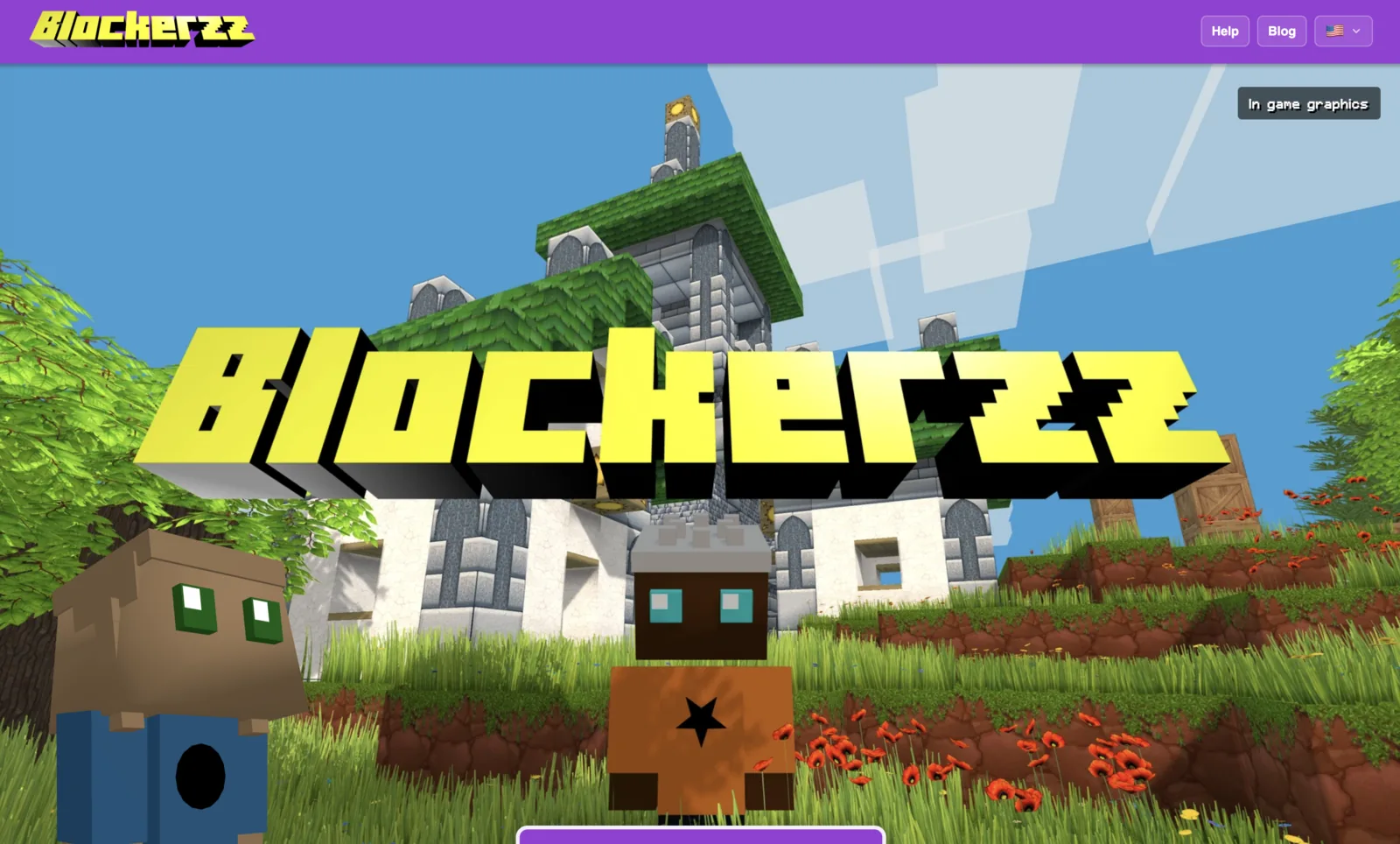
www.blockerzz.com is the doorway I created … it’s my passion project … a Minecraft-inspired game coding platform that runs instantly in the browser on any device. Instantly accessible to World-Builders from age 7 to 70!